When England play football against Germany…

If you mention the word “football” to most Germans, then being English you are liable to be involved in a discussion about that goal.

Yes, the goal that took England 3-2 up against West Germany in extra time of the World Cup final at Wembley in 1966 thanks to a decision by a Russian linesman that most German football supporters have been disputing ever since.

German football fan - ©Can Stock Photo Inc. / gubh83One lesser known fact about that match is that Helmut Haller who scored the first goal for Germany kept the ball, as is the tradition here, rather than Geoff Hurst, who scored a hat-trick and by English tradition should have been allowed to keep it.  Haller returned the ball 30 years later.

But once you get past discussing whether it was a goal or not, the self-proclaimed German football experts like to remind you how often England have gone on to lose against their team, especially the last match at the old Wembley stadium and World Cup qualifier in 2000.

So it’s worth reminding them that in the return match in Munich in 2001 England beat them 5-1 – one of the worst ever defeats for the German national team – at which point the subject is usually quickly changed.

The strange thing is that the Germans actually like playing against the English side.  They even look forward to it, and call it one of the “classic” international games.

This week England and Germany were both playing to qualify for the second round of the World Cup in South Africa.  I was in Cologne and able to observe how many German fans were supporting England during their match.  They wanted them to get through to the next round.  They wanted to play them next.

There is, of course, no doubt about which team they will be supporting tomorrow evening, although I have heard the opinion expressed that they would rather lose to England now than to Argentina in the quarter final (with the added bonus of seeing another “classic”: England v Argentina).

I on the other hand will hopefully be cheering at the opposite moments to the rest of our building, and looking forward to further discussions and analysis with my clients in the coming week, however the game turns out.

When I was asked this week for my prediction, I always gave a diplomatic answer: “It’ll go to penalties”.
Open All Hours

“Open All Hours” ist eine weitere britische Sitcom.  Diese Serie lief in vier Staffeln zwischen 1976 und 1985.

Wie man vielleicht vermuten könnte geht es in dieser Sitcom um ein Geschäft, das lange Zeit am Tag  geöffnet hat. Es handelt sich hierbei um ein Lebensmittelgeschäft. In einer Folge spielt sich ein Tag der beiden Hauptakteure Arkwright und Granville ab. Die beiden sind miteinander verwandt, Arkwright ist Granville’s Onkel. Er hat Granville vor langer Zeit bei sich aufgenommen und er arbeitet bei seinem Onkel im Geschäft. Arkwright nutzt das für sich aus und lässt ihn früh morgens den Laden öffnen und spät schließen. Außerdem zeichnet er sich durch seinen Geiz aus und obendrein stottert er, was einen sehr zum Lachen bringen kann.

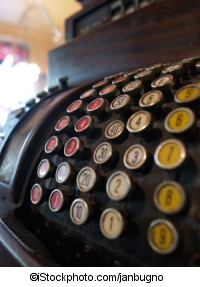
Kasse - ©iStockphoto.com/janbugnoDer Geiz geht auch dahin, dass er die “gefährliche” Kasse nicht austauschen möchte, die jedes Mal beim Öffnen und Schließen nach den Fingern von den beiden grapscht. Deswegen schickt er meist Granville vor, der sich absolut vorsichtig der Kasse annähert und von weit weg mit einem Finger bedient. Die Szenerie allein ist schon sehr lustig und jedes Mal fällt eine Dose von der Kasse herunter, und man weiß vorher nie, ob beim Öffnen oder Schließen.

Eine Folge fängt meist damit an, dass Arkwright aus seinem Laden tritt und das Angebot des Tages mit Farbe auf das Fenster schreibt. Oder Granville ist schon dabei. Und oft ist ein Fehler im Angebot. Dann heißt es von Arkwright: ” G-Granville, f-fetch yer cloth!”. Egal wer den Fehler gemacht hat, Granville soll ihn wegwischen. Manchmal macht er auch absichtlich einen Fehler. Denn wer den Fehler nicht sieht kommt rein kauft etwas und wer den Fehler sieht und darauf aufmerksam machen will, aber nichts kaufen,  muss auch in den Laden und dann ist er in der Höhle des Löwen und kommt nicht raus ohne etwas gekauft zu haben.

Arkwright ist der Meister des Verkaufens, möchte er etwas verkaufen hat er jede Menge Tricks auf Lager die die Kunden dazu bringen, von sich aus zu denken, dass sie den Artikel unbedingt haben müssen.

Dann gibt es Kundinnen wie Mavis, eine jüngere Dame, die immer einen Einkaufszettel dabei hat. Sie liest vor was sie haben möchte und wird gefragt ob groß, klein oder welche Sorte. Die Entscheidung ist nicht immer so einfach 😉  Und manchmal kann es passieren, dass sie sagt, wenn er den Artikel schon geholt hat: ” Aber ich habs durchgestrichen!”.

Das Geschäft ist übrigens kein Selbstbedienungsladen, die Artikel stehen hinter der Theke, sodass nur Arkwright oder Granville sie holen können. Daher ist eine Szene mit Mavis besonders lustig. So geht es durch den Tag mit verschiedenen Kunden die alle ihre Eigenheiten haben.

Wenn Granville morgens den Laden öffnet mit den vielen Bolzen an der Tür, kommt bald darauf die Milchfrau die täglich zwei Flaschen Milch bringt. Mit ihr flirtet er jeden Morgen. Leider können sich die beiden nicht verabreden, denn er muss den Tag über arbeiten und sie geht Abends früh schlafen, denn sie muss früh aufstehen.

Und dann gibt es noch die Krankenschwester Nurse Gladys Emmanuel. Arkwright würde sie gerne heiraten, aber sie muss ihre Mutter pflegen. Seine Verkaufstricks durchschaut sie und lässt sich nicht dazu überreden etwas zu kaufen, was sie nicht will. In diesem Fall pocht sie auf ihre Verlobung, dass er mit ihr das nicht machen könne, wobei sie sonst nicht all zu viel davon wissen möchte.

Diese Sitcom ist wirklich sehenswert und ist wurde in einer Abstimmung über die besten Sitcoms auf dem 8. Platz gewählt. Es gibt viel zu Lachen um die alltäglichen Probleme im Leben.

Seifenkisten – it all started in Oberursel

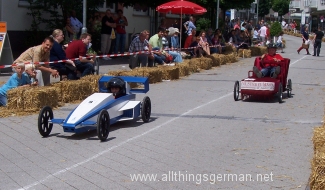
Many people have heard of soapbox cars, but I’m sure not many associate the term with the type of vehicles that took place in the annual Seifenkistenrennen the other day in Oberursel.

I suspect even less know where the sport originates from.

Whilst the original design may go back to wooden crates used for transporting soap, the modern designs are either more ambitious or extravagant.

Some resemble racing cars, others old-timers.  But what makes the races particularly interesting is not just the speeds at which they travel, but the unusual ones.  One good example of this would be the “sofa on wheels” that took part in the races here this year.

The length of the course is strictly governed, as are the weight and ages of those taking part.  But even the start ramp has a specification to make the races across Germany as equal as possible.  And yes, there is even a national championship.

Seifenkisten on Oberursel 2010

Seifenkistenrennen in Oberursel

What makes the race in Oberursel special is that the town lays claim to the origins of the sport.  The story goes that the first race was held in the Ackergasse, by children who built their cars having been inspired by the racing cars and their drivers taking part in the Gordon Bennett Cup that was held in the area in 1904.

There is even an exhibition about it in the town’s muesum.

Please click on ACCEPT to give us permission to set cookies [more information]

This website uses cookies to give you the best browsing experience possible. Cookies are small text files that are stored by the web browser on your computer. Most of the cookies that we use are so-called “Session cookies”. These are automatically deleted after your visit. The cookies do not damage your computer system or contain viruses. Please read our privacy information page for more details or to revoke permission.

Close