The LZ-10 to Haría

Just a look at the map gives you some idea of what the road to Haría is like.

The spectacular views of the ocean in the distance are combined with a drop of several hundred metres on one side of a road that is not always wide enough for two vehicles to pass without slowing.

Here is a short film I made of a journey along the road last year.  It does not contain any sound:

Content not available.
Please allow cookies by clicking Accept on the banner

That said, the road is sometimes used for racing:
Content not available.
Please allow cookies by clicking Accept on the banner

Planet Germany

If you live long enough in another country, then you inevitably gather a whole collection of experiences in dealing with the people and the culture there.

It may be that you have to handle lots of bureaucracy, or cope with unusual customs, or it may be just plain getting used to driving on the other side of the road.

For many ex-pats, these tales of living in a strange land can often form the basis of conversations with friends and family back home, but seldom do they get published as a book for a wider audience.

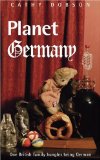
Planet GermanyCathy Dobson, who we talked to last year, took this brave step and wrote “Planet Germany” which, as she puts it, documents how “one British family bungles being German”.

In the book, she takes us through an entire year in the life of her family and business as we discover how they cope with living as British ex-pats in Germany.  Many readers will be familiar with the situations that she describes, such as the first knock on the door of the Sternsinger, the madness of the Karneval season, or just the amazement at the end of each year that, after telling their fortunes by dropping molten lead into cold water, most households sit down on New Year’s Eve to watch the same little-known sketch in black and white as the previous year.

Add to this the fact that her business partner tries to help her with such traditions as the correct use of Du and Sie, whilst at the same time forming her own opinion of the simple British customs that have travelled with the family.  Stuffing a turkey, for instance.

I thoroughly enjoyed reading Planet Germany.  It is a book that you will not want to put down!

Who invented the computer?

If you ask someone in the United Kingdom the question “who invented the computer?”, then one of the most likely answers is “Charles Babbage”.

But, as I was reminded last week during the opening speech of a “Computer Art” exhibition, people in Germany would give a different answer.  Most of them would probably answer with “Konrad Zuse”.

So why the difference?

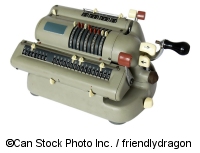
A mechanical calculator - ©Can Stock Photo Inc. / friendlydragonOne reason might be that each country looks to its own citizens and their inventions.  The telephone is a similar example.  Whilst people in the UK and USA will tell you that it was Alexander Graham Bell who invented the telephone, most people in Germany – especially in the Taunus region – say that it was Philipp Reis.

The truth is usually that both Babbage and Zuse had a hand in the development of the computer at some time.  Babbage devised a machine that would perform calculations (“difference engine”) and later one that could be programmed using punch cards (“analytical engine”).  His machines were mechanical, and would be operated by turning a wheel on a crank shaft.

Zuse on the other hand [Read more…]

Please click on ACCEPT to give us permission to set cookies [more information]

This website uses cookies to give you the best browsing experience possible. Cookies are small text files that are stored by the web browser on your computer. Most of the cookies that we use are so-called “Session cookies”. These are automatically deleted after your visit. The cookies do not damage your computer system or contain viruses. Please read our privacy information page for more details or to revoke permission.

Close