Howletts Wild Animal Park

Howletts ist ein großer Zoo, der insofern außergewöhnlich ist, als dass er schon seit langem versucht vom Aussterben bedrohte Tierarten zu schützen und wieder zu vermehren. Es gibt verschiedene Affenarten, Gorillas, Tiger, Elefanten, Zebras, einige Vogelarten und andere Tiere.

Der Zoo legt auch viel Wert darauf, dass die Tiere viel Platz haben und sich nicht eingeengt fühlen. Dann ist die Chance auf Nachwuchs auch höher. Die Tiere haben in ihren Gehegen auch zahlreiche Beschäftigungsmöglichkeiten. Die Affen können klettern und auch rutschen und der Tiger kann auf einer Art Brücke die Sonne genießen. Denn Langeweile ist auch für Tiere schlimm. Der Park ist sehr weitläufig und es lohnt sich einen Tagesausflug daraus zu machen. Es gibt genügend Möglichkeiten zum Essen und Trinken, aber man kann auch eigenes mitbringen und ein Picknick machen. In den drei Shops kann man den Zoo unterstützen, es gibt in jedem Shop andere Souvenirs zu erstehen.

Eines der Affengehege

Ich war vor ca. 3 Jahren schon einmal da und hatte einen schönen Tag mit meiner Familie. Meine Tochter war zu dem Zeitpunkt noch recht klein und konnte nicht alles richtig verstehen. Sie hatte aber trotzdem ihren Spaß den Tieren zuzuschauen und sie konnte sich auch auf dem Spielplatz in der Nähe des Restaurants austoben. Sie hat damals ein T-Shirt von dort bekommen und hat heute noch Erinnerungen daran.  Sie war auch sehr beeindruckt von dem Tiger, den man teilweise sehr nah sehen konnte.
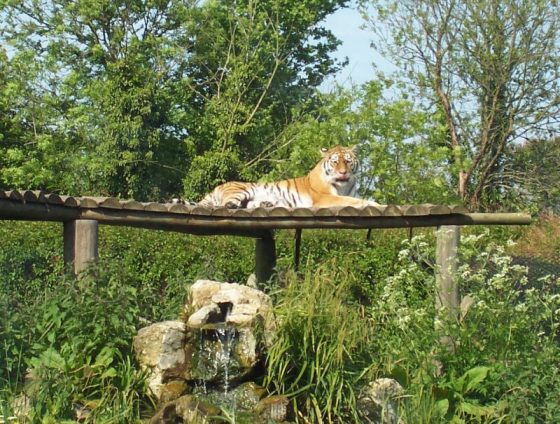
Ein Tiger genießt die Sonne

Am besten kommt man mit dem Auto zu Howletts denn er liegt etwas außerhalb von Canterbury. Aber man hat auch die Möglichkeit mit einem Linienbus hinzufahren.

Do biofuels make food more expensive? My dealer says: no!

There has been a lot of dicussion in the media recently about biofuels.  Many people, even U.N. officials, claim that producing biofuels is pushing up the cost of producing food and thus making it more difficult to fund projects in third-world countries.

The issue is so important, that my car dealer has sent out a newsletter to inform his bio-ethanol customers how he sees the situation.

He agrees that the price of basic foodstuffs has risen, but points out that the price of grain on the world markets is at the same level as it was in 1980.

The reason for this is apparently that during the 1990s the EU and the USA there was an overproduction of grain which, coupled with subsidies, led to the price dropping so much that it often cost more to transport a sack of grain that the contents of the sack itself were worth.

I remember at the end of the 1990s being involved in projects campaigning for the “fair pricing” of goods from third-world countries.  Farmers in those countries should have a fair chance to sell their produce on the world markets, but were being forced to sell at artificially low prices due to the subsidies of the wealthier countries.

The rising food prices are down to these policies, and not due to biofuel production, he claims.  Indeed, he continues by writing that less than 1% of the world biomass production goes towards making biofuels.  It is unlikely that such a small percentage could have such a large effect on food prices.

It is also worth noting, that European biofuels are made from sources such as sugar-beet – and mainly from extra-production or as a secondary product.

So I shall carry on filling up my car with bio-ethanol with a clear conscience.

The U.S. votes – and Bolivia waits…

Bolivia has not really got on too well with President Bush’s administration.

Over the past year they have expelled each other’s ambassadors.  Bolivia has accused U.S. officials of supporting anti-government demonstrations, whilst the U.S. has withdrawn trade benefits because it says Bolivia is not co-operating as much as they would like on the battle against illegal drugs.

So this morning I was fascinated by a headline in my inbox this morning: “Bolivia wants better ties with next U.S. government.”

What does Bolivia expect from the new administration?  I’m not so sure that either candidate in the U.S. would change much in the relationship with Bolivia.  A new U.S. President cannot be seen to be soft on drugs, and unfortunately for many people the local uses of the coca leaf in Bolivia are ignored – for them it is the basis for cocaine and nothing else.

President Morales, on the other hand, will not want to make concessions to a new U.S. President and disadvantage his own people.

So whatever the outcome of today’s election, I think the stalemate will continue.  But perhaps with the right result, it may be a case of laissez-faire, with each side leaving the other to get on with their policies.  In the long run this could help both countries more than applying unwanted pressure.

Please click on ACCEPT to give us permission to set cookies [more information]

This website uses cookies to give you the best browsing experience possible. Cookies are small text files that are stored by the web browser on your computer. Most of the cookies that we use are so-called “Session cookies”. These are automatically deleted after your visit. The cookies do not damage your computer system or contain viruses. Please read our privacy information page for more details or to revoke permission.

Close