Ever since the Euro was introduced, people in Germany have claimed that everything is more expensive. This came to be symbolised by the term “Teuro” and just after the changeover TV shows went looking for restaurants and shops that had simply changed the currency sign and not the price – effectively doubling the amount to be paid.
Others (including one of my favourite stands at the Frankfurt Christmas Market) showed their prices in both currencies, to prove that they had not used the opportunity to put the prices up.
Last week, the Tagesschau news reported that although prices for food have gone up, the average wage has risen even more – meaning that in real terms food as got cheaper for most people.
Most importantly, the price of food items has risen in 2007 by 5.8%, with some items such as butter and milk going up by 46% and 28% respectively.
But it is an interesting comparison, that in 1980 a manual labourer had to work 21 minutes on average to earn enough for 250g of butter, but in 2007 this was down to 4 minutes.
So put quite simply – yes, we had to spend more, but we also earned more. It wasn’t just our imagination after all!

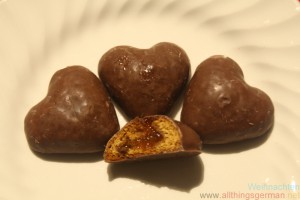 Lebkuchen is a type of cake associated with Christmas. It is baked using honey and a number of spices and is known throughout Germany by a variety of names such as Pfefferkuchen and Magenbrot.